A homeowner searches “plumber near me” because a pipe is leaking.
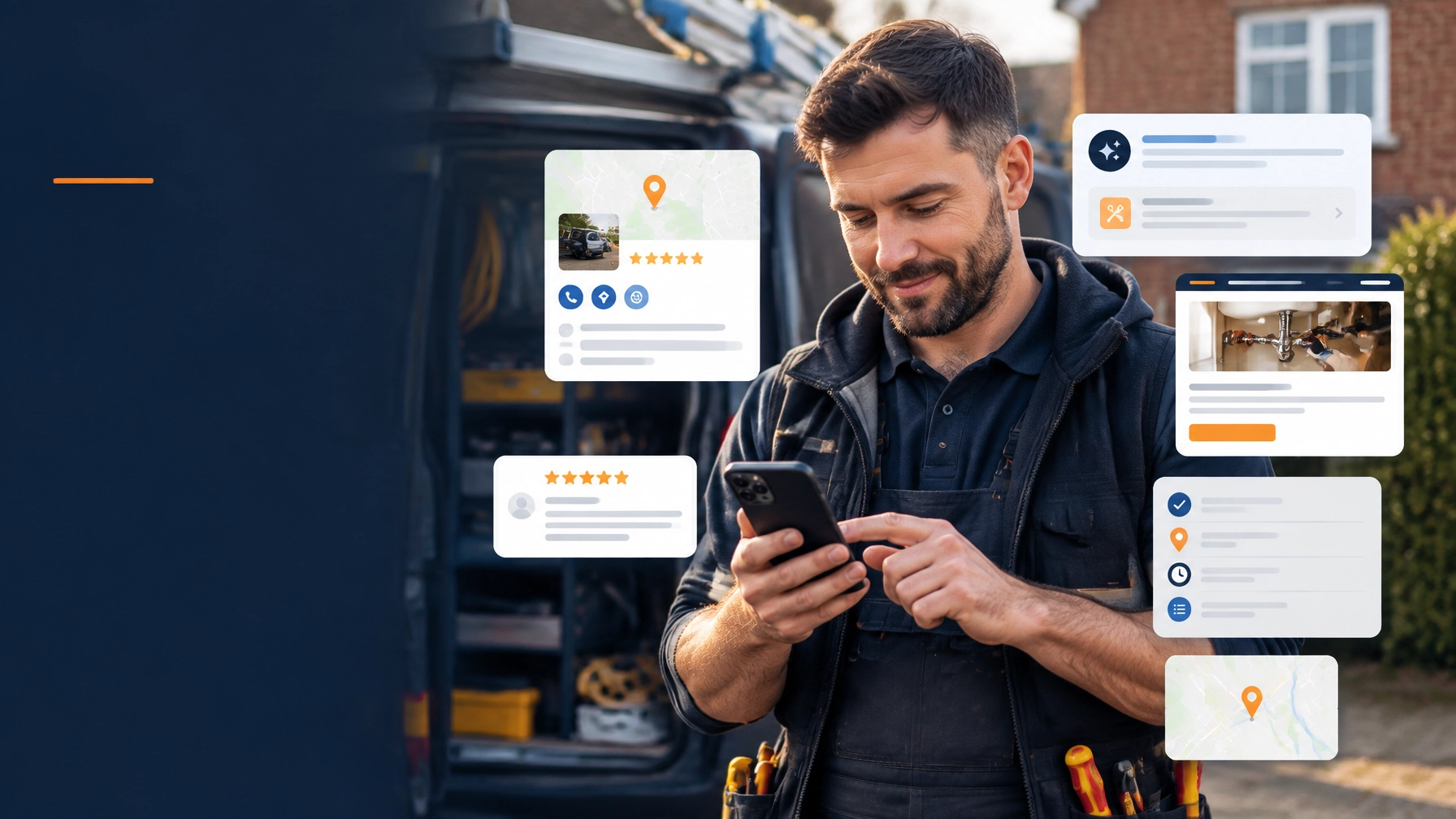
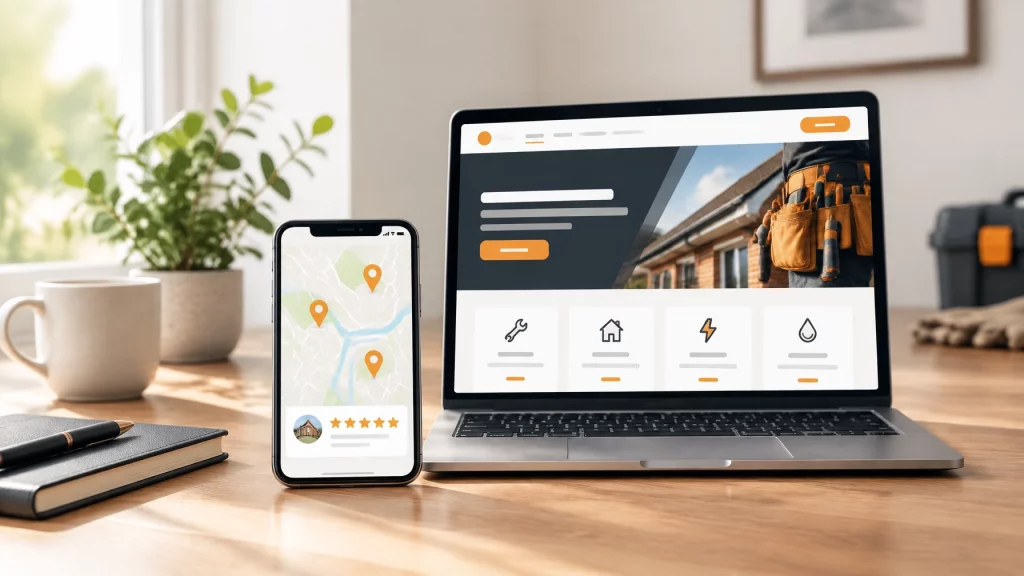
Google shows a map with three nearby businesses, a handful of reviews, opening hours and a phone number. That is the Google Business Profile doing its job. It helps the homeowner find you quickly and decide whether you look genuine.
Then they tap the business that looks most suitable and visit its website.
That is where the decision is often made.
They check what services you offer, whether you cover their area, whether you look professional and whether contacting you will be straightforward. If the website is clear, they may call or send an enquiry. If it is missing, slow or confusing, they may go back to Google and choose someone else.
So which wins more local jobs: a Google Business Profile or a trade website?
The straightforward answer is that you need both. They do different jobs, and neither works as well on its own.
What a Google Business Profile does well
A Google Business Profile is the free listing that can show your business in Google Search and Google Maps.
For a local tradesperson, it can put important information in front of a customer before they visit your website:
- Your business name
- Your phone number
- Your opening hours
- Your service area
- Customer reviews
- Photos of your work
- Your services
- A link to your website
Google says local results are mainly influenced by relevance, distance and prominence. In simple terms, it wants to show businesses that match the search, are close enough to help and appear established or trusted.
That makes your profile particularly useful for searches such as:
- Plumber near me
- Electrician in Lincoln
- Builder near Nottingham
- Emergency roofer Sheffield
- Plasterer open today
A complete, verified profile can help you appear in the map results when local customers are looking for your trade.
It also gives people a quick way to call. For urgent work, that matters.

What your Google Business Profile cannot do
A profile is useful, but it has limited space.
It cannot properly explain how you work, show a full range of completed projects or answer every question a customer may have before making contact.
For example, a plumber might want to explain:
- Which boiler brands they work with
- Whether they handle emergency call-outs
- What areas they cover
- How they approach bathroom installations
- What customers should do when a pipe bursts
- Why customers choose them over another local plumber
You can add services and photos to your profile, but it is not designed to become a full information centre for your business.
It also cannot give you a proper page for every useful search.
A customer searching for “emergency roof repair in Chesterfield” or “skim coat plastering in Lincoln” needs more than a short profile description. Those searches are better supported by focused pages on your website that clearly explain the service and location.
That is where a website gives you more room to be useful.
Your website helps the customer decide
Your Google Business Profile helps people discover you.
Your website helps them decide whether to contact you.
A proper trade website should answer the questions customers are already asking:
- What work do you do?
- Do you cover my town?
- Have you completed similar jobs?
- Are you qualified or insured?
- Can I see examples of your work?
- How quickly can I contact you?
- Do you seem reliable and professional?
You do not need hundreds of pages or complicated features. You need clear information presented properly on a phone.
That might include a home page, service pages, local area information, reviews, project photos, an about section and a simple contact form.
For a plumber website, that could mean separate information about leaks, boiler repairs, bathrooms and emergency plumbing.
For electrician website design, it could include pages for rewires, EICR certificates, lighting, fuse boards and EV chargers.
For a builder, a builder website can explain extensions, renovations, loft conversions and other higher-value work in much more detail than a profile allows.
A profile gets the click. The website needs to make the next step obvious.
Why the two work better together
The strongest setup is not Google Business Profile versus website.
It is Google Business Profile linked to a clear, consistent website.
The basic details should match across both:
- Business name
- Phone number
- Address or service area
- Opening hours
- Main services
- Website address
If your profile says one thing and your website says another, customers may become unsure. Google may also have a less clear picture of your business.
For example, if your profile says you are a domestic electrician in Nottingham but your website only talks about commercial electrical work in Derby, neither customers nor Google gets a strong answer.
The two should support each other:
- Your profile shows customers that you are local.
- Your reviews provide quick trust signals.
- Your website explains your services properly.
- Your website gives customers more reasons to contact you.
- Your profile links people directly to that information.
You can also display genuine customer reviews on your website, alongside project photos and details of your work. That gives customers more context than a star rating alone.
What about Google’s AI answers?
Search is changing. Customers now see more direct answers in Google and increasingly use AI tools to find businesses and services.
These systems need clear, reliable information to understand what a business does.
Your Google Business Profile gives them useful basics: your name, category, location, hours, reviews and contact details.
Your website can add the detail:
- The exact services you provide
- The towns and areas you cover
- The type of customers you work with
- How your process works
- The questions customers regularly ask
- Evidence of completed work
A profile on its own gives an AI system very little to explain beyond the basics. A profile and a well-structured website provide a much fuller picture.
This does not guarantee that Google or an AI tool will recommend you. Results vary by area, competition and the information available about your business. But clear, consistent information gives your business a better chance of being understood correctly.
You do not need to learn complicated technical terms. The practical aim is simple: make your services, locations and contact details clear.

A simple local search checklist
Work through these points before worrying about anything more advanced.
1. Claim and verify your profile
Make sure you control your Google Business Profile and complete the verification process. Google says verified, accurate profiles are more likely to appear for relevant local searches.
If you travel to customers rather than operate from a public shop or office, set the profile up as a service-area business and only list areas you genuinely cover.
2. Match your business details
Check the name, phone number, website and service area on both your profile and website.
Keep the details consistent. Small differences can create unnecessary confusion.
3. Add services in both places
List your main services on your profile. Then explain them properly on your website.
“Plumbing” is broad. Pages about boiler repairs, burst pipes, bathroom plumbing and emergency work give customers much more useful information.
4. Ask for genuine reviews
Ask satisfied customers for a review after each completed job. Do not offer rewards or write reviews yourself.
A short, honest review that mentions the work completed, your reliability or the area you served can help future customers understand what you do.
5. Add real photos
Use photos of completed work, your team, your van or your equipment. They do not need to look like an advert.
Real images often feel more trustworthy than generic stock photography.
6. Link everything together
Your Google Business Profile should link to your website. Your website should make your Google profile easy to find where appropriate.
The goal is a clear path from search, to information, to contact.
What does a website cost compared with a profile?
Your Google Business Profile is free to create and manage.
A website has an ongoing cost because it needs a domain, hosting, security, updates and someone to build and manage it. Traditional agency builds can cost around £500 to £1,500 upfront, with hosting and updates sometimes charged separately. Larger projects can cost more.
At Trade Sites UK, the managed service costs £49 per month, with no upfront build fee and no minimum term. It includes:
- A professional trade website
- Mobile-friendly design
- Hosting and updates
- A domain name if needed
- SSL security
- Enquiry forms
- Local Google setup
- Direct enquiries sent to you
You see a full preview before continuing, and you can cancel without an early exit fee. You can see the full pricing details here.
That is not a promise of instant rankings or a fixed number of enquiries. Results vary depending on your area, services and competition. It is simply a lower-cost way to have a proper website working alongside your profile, rather than relying on a profile alone.

Frequently asked questions
Do I need a website if I have a Google Business Profile?
You can have a Google Business Profile without a website, and it may still help you appear in local map results.
However, a website gives customers more information and gives you more opportunities to appear for detailed searches. It also gives you somewhere to send people when they want to check your services, previous work and contact options.
Is Google Business Profile free?
Yes. Google Business Profile is free to create and manage.
You may choose to pay for help with setup, photos, website work or ongoing marketing, but Google does not charge you to have the profile itself.
Which is more important for getting local work?
They serve different purposes.
Your profile is particularly important for appearing in Google Maps and giving customers quick information. Your website is important for explaining your services, building trust and supporting searches beyond the basic map listing.
For most trades businesses, the better approach is to keep both accurate, active and connected.
How long does it take to rank?
There is no fixed timeframe.
A complete Google Business Profile may start appearing for relevant local searches relatively quickly, but stronger visibility can take weeks or months. Website rankings also depend on your location, competition, services, reviews and how well the site matches what people search for.
No genuine web designer can guarantee a particular position or number of enquiries.
The practical answer
Your Google Business Profile gets you onto the local customer’s shortlist.
Your website helps you stay there.
One shows where you are, what customers think and how to contact you. The other explains what you do and gives people a reason to choose you.
So do not treat them as competing options. Set up the profile properly, build a clear website around your actual services, keep the details consistent and make contacting you easy.
That is the simple combination that gives local customers less reason to keep searching.