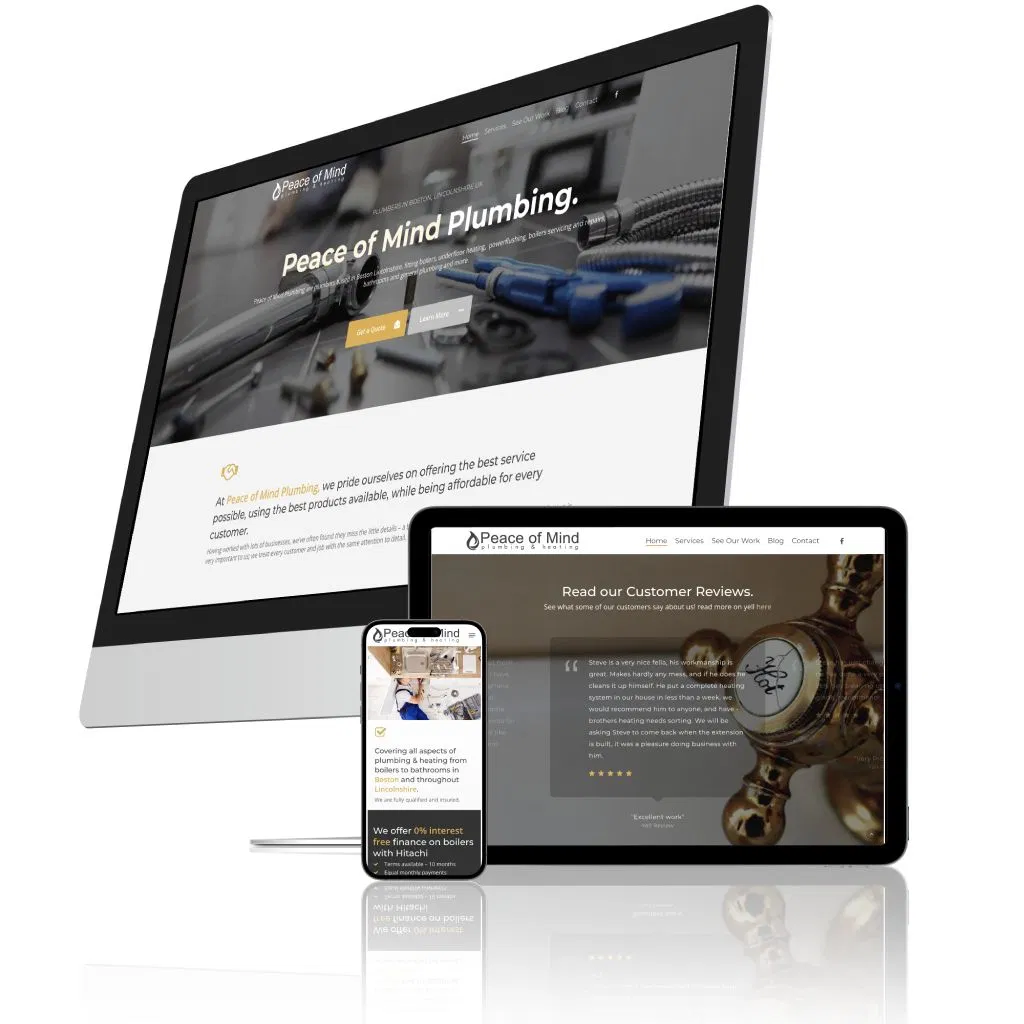
If you need more work, Google Ads and your own website can both help. They just do different jobs.
Google Ads buys attention now. Your website earns attention over time.
Neither approach is wrong. If your diary is suddenly empty and you need enquiries this month, paid search can put your business in front of local customers within days. If you want a more predictable online presence that keeps working over the next few years, your own website gives you a proper foundation.
The mistake is treating them as direct replacements.
Most trades businesses benefit from building the website first, then using Google Ads when they need extra speed, seasonal work or a way to test a new service.
What Google Ads genuinely does well
Google Ads has a clear advantage: it can work from day one.
You choose the services, locations and budget. Your advert can appear when somebody searches for a plumber, roofer, electrician or builder in your area. You do not have to wait for your website to build up search visibility before you start getting seen.
That makes Google Ads useful when you:
- Need enquiries quickly
- Want to promote a particular service
- Have spare capacity this month
- Want to test whether people search for a service locally
- Need extra work during a quieter period
- Are launching in a new area
You also get control. You can set a daily budget, pause a campaign, change the area you target or focus on higher-value jobs. Google explains that costs vary according to competition, search intent, location, bidding and the quality of your advert and landing page. A well-matched campaign can make better use of the same budget than a poorly targeted one.
That control is valuable. Paid traffic is not automatically wasteful. For the right job, in the right area, it can be a sensible way to create demand quickly.
What Google Ads costs in reality
The difficult part is that you pay for the click, not the job.
Indicative UK trade benchmarks often put search advertising at around £2 to £8 per click. Emergency services and competitive cities can be higher. Plumbers, roofers and electricians may see different prices depending on the search term, location and number of competitors bidding.
These are not fixed prices. Your results will vary by trade, area, competition, advert quality and the value of the work you take on.
The important point is the chain:
Clicks → enquiries → booked jobs
A click is not an enquiry.
An enquiry is not a booked job.
For example, suppose you spend £300 on Google Ads and receive clicks at £4 each:
- £300 buys around 75 clicks
- If 8% contact you, that creates around 6 enquiries
- If you win one in three enquiries, that produces around 2 jobs
That would make the advertising cost roughly £150 per booked job, before considering your time, quoting, fuel or the value of the work.
A different website, service or area could perform much better. Another could perform worse. The figures are simply a way to see where the money goes.
This is why a £300 budget does not mean £300 worth of jobs. It buys opportunities. Your advert, website, phone handling, prices, reviews and availability all affect what happens next.
Why your website matters even when you run ads
Google Ads needs somewhere useful to send people.
If someone clicks your advert and lands on a slow, confusing page with no clear service area or contact button, the budget has already been spent. They leave.
A good landing page should answer the questions a customer has straight away:
- Do you provide the service they need?
- Do you cover their location?
- Do you look trustworthy?
- Can they call or request a quote easily?
- What should they do next?
This is where trade website design in the UK needs to be practical rather than decorative. The site should support the decision, not distract from it.
You might run an advert for “boiler repairs in Doncaster”. Sending that visitor to a generic homepage is usually weaker than sending them to a clear boiler repairs page with your phone number, service area, reviews and enquiry form.
The same applies whether you need a web designer for builders, a plumber web design agency or local web design for trades generally. The page needs to match the search and make contacting you straightforward.
Your website is not optional because you advertise. It is where the conversion happens.

What your own website genuinely does well
A website works differently from advertising.
It does not usually create a sudden rush of enquiries as soon as it launches. It needs time to appear in local search, build trust and collect useful signals from your Google Business Profile, reviews, links and content.
But it gives you something paid advertising does not: an online asset that keeps building value.
A proper website can:
- Work around the clock
- Give customers one clear place to check your business
- Support your Google Business Profile
- Bring in organic search visitors without paying per click
- Help referrals verify that you are genuine
- Explain your services and locations clearly
- Give every enquiry a direct route to you
The monthly website cost stays the same whether ten people visit or one hundred people visit. You are not charged another few pounds for every person who clicks.
That does not mean every visitor becomes a customer. It means the cost model is more predictable.
A website also builds on itself. Service pages, area pages, reviews and useful content can continue working after they are published. Your visibility can improve over time, although results vary and competitive searches can take longer.
With paid advertising, the traffic normally stops when the budget stops.
With your own website, the work you have paid for can continue supporting your business next month and next year.
The honest £49/month comparison
A modest Google Ads budget can use more than £49 in a couple of days.
At £10 per day, you could spend around £300 in a month. At £25 per day, that becomes roughly £750. You may generate good work from that spend, but you are paying for the opportunity each time someone clicks.
The £49/month website service is a different type of cost:
- It is fixed and predictable
- There is no upfront build cost
- Hosting and updates are included
- Your domain can be registered in your name
- You do not pay for each visitor
- You can cancel without a minimum term
At £49 per month, the cost is £588 over a year. That does not guarantee a set number of enquiries, and it does not replace good service, reviews or proper local marketing.
It does give you a professional base without asking you to spend hundreds or thousands before seeing the site. You receive a preview first, so you can check the layout and wording before continuing.
This is why cheap tradesman websites can make sense when “cheap” means simple, focused and properly managed rather than rushed or generic.
You are not choosing between a website that guarantees jobs and adverts that waste money. You are choosing between two different ways of getting attention.
Build the website first, then add ads when useful
For most small businesses, the sensible order is:
- Build a clear, mobile-friendly website.
- Set up your local Google presence properly.
- Add service and location pages.
- Make sure calls and enquiry forms work.
- Use Google Ads to increase visibility when you need it.
This approach gives your advertising somewhere strong to land. It also means that customers who find you through word of mouth, Google Maps or an advert all see the same professional business.
A builder might start with a homepage, extensions page, kitchen fitting page and service area pages. A plumber may need boiler repairs, leaks, bathrooms and emergency plumbing. An electrician could focus on rewiring, consumer units, lighting and landlord work.
You can see examples of how this structure works on the builder website, plumber website and electrician website pages.

Which option should you choose?
Use this simple guide.
You need work this month
Consider Google Ads, but send the traffic to a strong, focused landing page. Set a clear budget and track calls, enquiries and booked jobs rather than clicks alone.
You want a predictable local presence
Start with your own website. It gives customers somewhere to find you, check your services and contact you. It can build local visibility over time without a charge for every click.
You want both speed and long-term value
Use your website as the foundation and Google Ads for busy seasons, new services or short-term gaps in the diary.
The best answer is often not Google Ads versus a website. It is a website first, with advertising added when the numbers make sense.
Lead platforms can be another option, but they have their own costs and trade-offs. If you are comparing those with building your own online presence, see our guide to alternatives to Checkatrade, Bark and other shared lead platforms.
What is included in a £49/month trade website?
Trade Sites UK builds and manages professional websites for UK trades businesses for £49 per month.
That includes:
- A mobile-optimised website
- A clear homepage and named service pages
- Service area pages for your local market
- Enquiry forms that come directly to you
- Local Google setup
- Hosting and updates
- A domain name if you need one
- SSL security
- A full preview before you pay
- No upfront build cost
- No minimum term
- No VAT currently added
- Cancel anytime
Your website is usually built within seven days of receiving your details. You do not need to manage the technical work yourself.
You see the finished preview first. If it is not right for your business, you can request changes before it goes live.
See the full pricing and what is included.
Frequently asked questions
Are Google Ads worth it for tradesmen?
They can be, particularly when you need enquiries quickly or want to target a specific service. The value depends on your cost per click, enquiry rate, job value and close rate.
Track booked jobs, not just clicks. Results vary widely by trade, location and competition.
How much should I spend on ads?
There is no single correct budget. A small local campaign might start with a few hundred pounds per month, while competitive trades and larger areas may need more.
Start with an amount you can afford to test, set a clear location and service focus, and review the actual cost per enquiry and booked job before increasing the budget.
Do I need a website if I run Google Ads?
In most cases, yes. Your advert needs to send people to a page that explains the service, proves you are local and makes contacting you easy.
You can sometimes use a dedicated landing page, but it still needs to work like a proper website page. A slow or unclear destination can waste otherwise useful advertising clicks.
Which is cheaper for getting work?
Google Ads is usually faster, but you pay for each click and results can change each month.
Your own website costs more slowly and predictably, but it normally takes longer to build local visibility. Over time, organic visitors may cost less per enquiry because you are not paying for every click.
The honest answer depends on your trade, area, competition and how well each channel converts. For many trades businesses, the most practical choice is a website first, then carefully managed advertising when extra work is needed.