
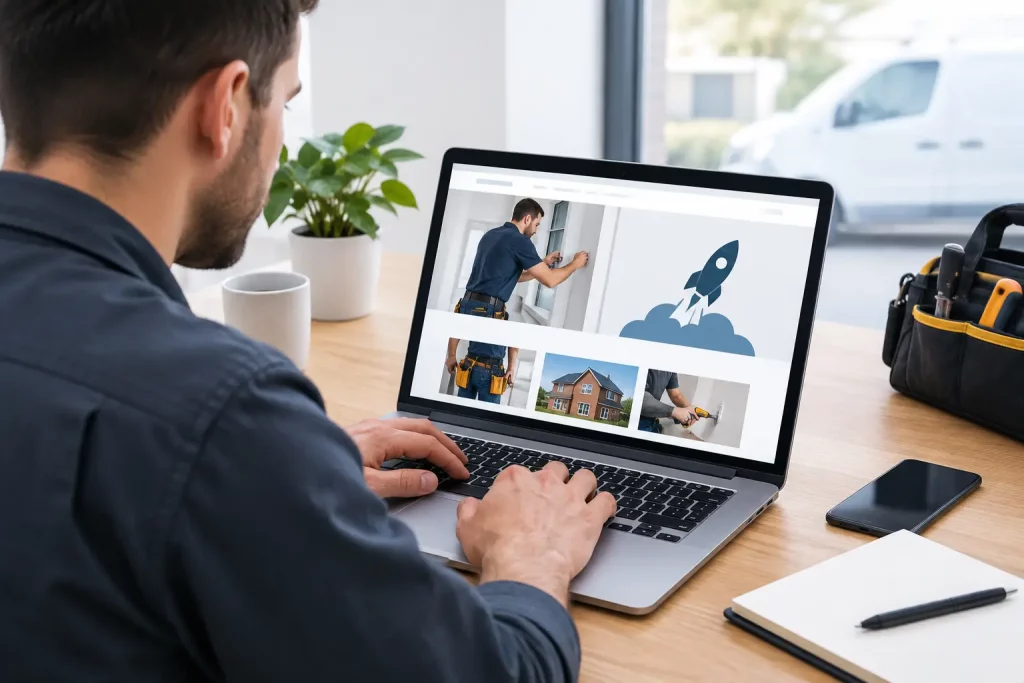
A customer has searched for a local plumber, roofer or electrician, found your business name, and wants to check you out before getting in touch. If there is no proper website to find, that enquiry can easily go elsewhere. So, how quickly can a website launch when you need to look credible and start bringing in more local quote requests?
For most trades businesses, a professional site can be live in under seven days. In some cases, it can happen sooner. The real answer depends less on complicated technical work and more on whether the basic business information is ready to go.
You do not need to spend weeks choosing colours, writing pages or trying to understand hosting. A focused trades website has one job: show customers what you do, where you work and how to contact you.
How quickly can a website launch for a trades business?
A simple, professional website can launch in under seven days when the setup is kept focused. That means building around the information local customers actually look for, rather than adding pages and features that will not help you win work.
For a plumber, that may be emergency repairs, boiler work and bathroom plumbing. For a builder, it could be extensions, renovations and brickwork. A roofer may need clear details of repairs, replacements and flat roofing. The services will change, but the essentials stay the same.
Your site needs a clear business name, a contact number, the areas you cover, a straightforward list of services and an easy way for customers to request a quote. Add a few genuine job photos or reviews if you have them, and customers have enough information to feel confident picking up the phone.
That is why a quick launch is possible. It is not about cutting corners. It is about getting the right things live first.
What can hold up a website launch?
The biggest delays are normally not technical. They happen when key details are missing, decisions keep changing, or the site tries to do too much before it has even launched.
The most useful starting point is a clear answer to a few practical questions: What trade services do you want enquiries for? Which towns or areas do you cover? What is the best phone number and email address for customers to use? Do you have a logo, photos or customer reviews that represent your work?
None of this has to be perfect. A basic logo or even just your business name can be enough to get started. You can always add new photos and refine service details later. Waiting for every last detail often means putting off a site that could already be helping people find you.
There is also a difference between launching quickly and expecting instant results from Google. Your website can be live in days, but building visibility takes time. The earlier it is live with clear local information and working contact options, the sooner it can begin doing its job.
What a fast, useful trade website should include
A quick launch should still give potential customers the confidence to contact you. A rushed-looking one-page site with no service detail, no location information and no proper contact route will not help much.
For most local trades businesses, the useful parts are simple: a clear opening message, a list of the work you do, the areas you serve, a phone number customers can tap on mobile, and a quote request form. Photos of completed jobs and customer feedback can make a real difference too, especially when someone is choosing between several local firms.
Mobile use matters here. Many people search for a tradesperson while they are out, at work, or dealing with a problem at home. They should be able to understand what you offer and contact you in seconds, without pinching the screen or hunting for a number.
A site also needs to look like it belongs to a genuine business. Clear wording, proper contact details and a tidy layout go a long way. You do not need flashy effects. You need something that makes the next step obvious: call, email or request a quote.
A realistic seven-day launch timeline
A seven-day window is realistic when the process is organised and neither side is waiting around for information. Here is what that can look like in practice.
Day one: share the basics
You provide your business name, services, contact details and coverage area. If you have a logo, job photos, reviews or existing wording you like, these can be included too. If you do not, that should not stop the process.
Days two to four: build the site around your work
The website is put together with your trade and local customers in mind. The focus is on making your key services clear, helping customers trust your business and giving them straightforward ways to enquire.
Days five and six: check the details
This is the point to check that the phone number is right, the service areas are correct and the wording reflects the jobs you want more of. Small changes are normal. Major changes to the business name, services or page structure can extend the timeline.
Day seven: go live
Once the details are approved, the website can be published. Hosting, forms and the essential Google setup should be handled as part of the process, so you are not left trying to make sense of domain settings or technical instructions after a long day on site.
Why launching sooner is usually better
Many tradespeople put off getting a website because they assume it will be expensive, time-consuming or full of jargon. Meanwhile, potential customers are searching online and choosing competitors who are easier to check and contact.
A website gives word-of-mouth referrals somewhere to go. When someone recommends you in a local Facebook group, on a building site or to a neighbour, the person receiving that recommendation will often search your name before calling. A professional website backs up that recommendation and makes you look established.
It also gives you more control than relying only on lead platforms. Those platforms can be useful, but they put you in competition with other firms for the same enquiry and may charge for access to it. Your own site is your business asset. It shows your services, your work and your contact details without placing another company between you and the customer.
The trade-off is simple. Launching fast means starting with the pages and information that matter most. It does not mean every possible service, photograph and testimonial must be in place from day one. Those can be added as your business grows.
Keep the launch simple, then keep it current
A website is not something you should have to worry about once it is live. Phone numbers change, you may take on new types of work, or you may want to add recent project photos. Those updates need to be easy to request, not another job on your list.
That is the value of an ongoing managed service. With Trade Sites UK, I handle the website setup, hosting, updates, forms and Google setup, so you can focus on the work in front of you. There are no upfront costs or long contracts to weigh up before you get started.
The quickest website launch is not the one with the most pages. It is the one that gets your business in front of local customers, makes you look dependable and gives them a clear reason to get in touch. If your details are ready, there is no reason to wait weeks for that to happen.