
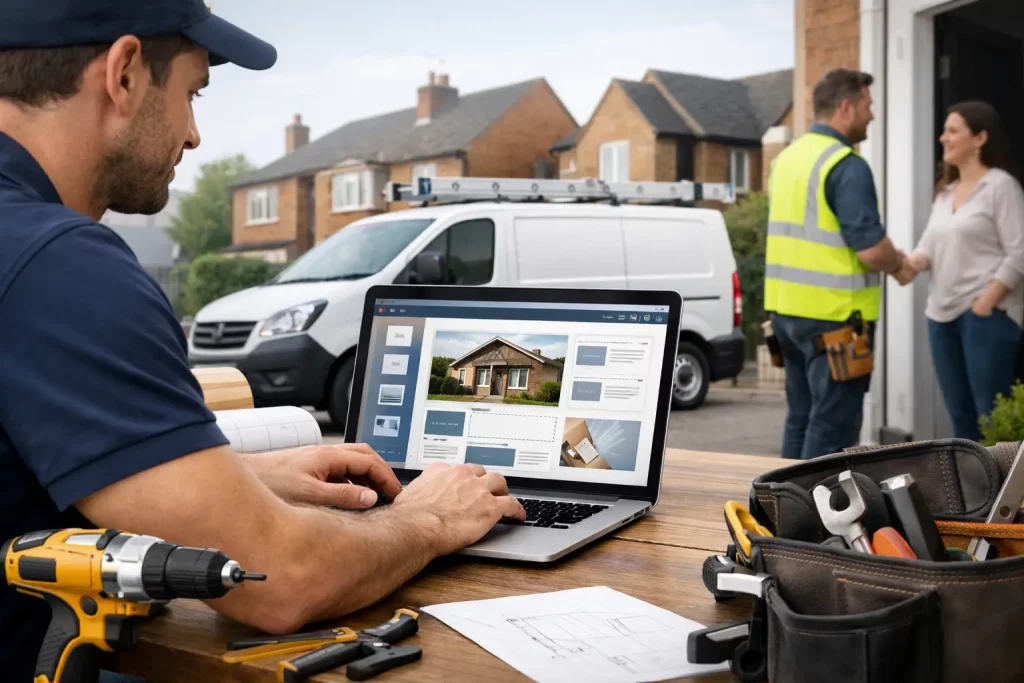
A customer has a leaking pipe, a failed boiler or a roof that needs attention. They are not looking for clever effects or pages of jargon. They want to know three things quickly: do you cover their area, can you do the job, and how do they contact you?
That is why the best website builder for tradesmen is not simply the one with the most templates or the lowest advertised price. It is the option that gives your business a professional site, works properly on a phone, and turns local searches into calls and quote requests without adding another job to your working week.
For most small trade businesses, the right answer is a simple managed website service rather than software you have to build and maintain yourself. Here is what to look for before you choose.
What a tradesman’s website actually needs to do
A good trade website has one job: make it easy for the right local customer to get in touch. Everything else is secondary.
Your homepage should say what you do, where you work and why a customer should choose you. A plumber in Leeds, for example, needs visitors to see their plumbing services, service area, phone number and quote form without hunting through the site. The same applies whether you are an electrician, builder, roofer, carpenter, plasterer or landscaper.
It also needs to look trustworthy. Customers often compare several businesses before making a call. Clear service details, genuine job photos, customer reviews and a straightforward contact route can be the difference between an enquiry coming to you or going elsewhere.
The best sites do not make a visitor think. They put the important information first and give people a clear next step: call now or request a quote.
The best website builder for tradesmen is built around enquiries
Website builders are often sold on design choice. For a local contractor, too much choice can be a problem. You can spend hours changing colours, moving sections and trying to work out why a form is not sending, while no one is getting back to the next enquiry.
Instead, judge a website option on whether it handles the parts that matter to your business:
- A clean, professional layout that suits your trade
- A site that is easy to use on mobile phones
- Prominent phone and quote request options
- Pages for your main services and local service areas
- Hosting, security and routine updates taken care of
- Help getting the essentials in place for Google
Those are not flashy extras. They are the foundations of a website that earns its keep.
A low monthly price is useful only if it includes the work needed to keep the site live, current and working. A cheap platform can become expensive in time if you are left to write every page, resize every image, deal with domain settings and fix problems yourself.
Mobile use is not optional
Many customers search for a tradesperson when they need help quickly. They are standing in a kitchen, sitting in a cold house or looking at a damaged fence. Most will use their phone.
If your number is hard to tap, your quote form is awkward, or the page takes too long to load, they will leave and try the next result. Your website should make calling or sending an enquiry feel immediate. That means clear buttons, short forms and no clutter around the key information.
Local relevance matters more than fancy features
A trades business does not need to appeal to everyone. It needs to be found by homeowners, landlords and local businesses in the areas it serves.
Your site should clearly set out your services and coverage. If you provide boiler repairs, bathroom plumbing and emergency call-outs across particular towns or postcodes, that should be simple for both customers and Google to understand. Vague wording such as “quality services everywhere” does not help anyone.
This is also why copied text and stock promises can weaken a site. Your business, trade, service area and contact details need to be accurate from day one.
The main options, and the trade-offs
There are three common ways to get a trade website. None is automatically wrong, but they suit different situations.
Build it yourself with website software
A self-build platform can look attractive because the entry price is low and you can make changes whenever you like. It may suit someone who enjoys working on their site and has time to keep on top of it.
The trade-off is that the responsibility stays with you. You will need to choose the layout, add content, connect the domain, set up forms, check mobile pages and make sure enquiries are arriving. Even a simple update can be pushed back when you are on jobs all day.
This route can work, but it is rarely the quickest route to a dependable business asset. A half-finished site or an old page with the wrong number is worse than having no site at all.
Pay a large upfront project fee
A traditional agency project may offer a highly tailored site, but it can come with a substantial upfront bill, lengthy back-and-forth and a launch date that keeps moving. That may make sense for a larger firm with complex requirements, several teams or a significant marketing budget.
For a sole trader or small local team, it can be more than is needed. You may only want a professional website that clearly shows your work and generates enquiries, not a drawn-out project with a large invoice before anything is live.
Choose a managed monthly service
A managed service sits between those two options. You get a professional site built for your trade, while someone else handles the practical work behind it. It is a good fit when you want predictable costs and do not want to spend evenings managing a website.
The key is to check what is included. Ask whether hosting, updates, contact forms, ongoing support and help with your Google presence are covered. Also ask how quickly the site can go live and whether you are tied into a long contract.
At Trade Sites UK, I provide this kind of service for £49 per month, with no upfront cost or long-term contract. The focus is simple: get a credible trade website live quickly, then keep it looked after while you focus on the work.
Questions to ask before you choose
Before committing to any website builder or service, ask practical questions that affect your enquiries.
Will customers be able to call or request a quote from every important page? Can the site show your key services clearly rather than trying to cover every possible job? Is it designed for phones first? Who updates it if you change your number, add a service or move into a new area?
You should also be clear about ownership and access. Your domain name is part of your business identity, so make sure you understand how it is registered and what happens if you ever change provider. Straight answers at the start prevent hassle later.
Finally, do not be distracted by features you will never use. Online shops, complicated booking systems, animation and dozens of pages may sound impressive, but they can add cost and confusion. A local roofer with clear proof of work, an obvious coverage area and a working quote form is in a stronger position than a site packed with unused extras.
Choose the option that leaves you free to work
The right website should not become another van-based admin task. It should quietly support the business while you are pricing work, completing jobs and looking after customers.
If you enjoy controlling every part of a site and have the time, a self-build platform may suit you. If you need something highly complex, a larger project may be justified. But if your priority is getting more local enquiries from a professional site without upfront costs or technical hassle, a focused managed service is usually the better fit.
Pick the option that makes it easier for the next customer to find you, trust you and get in touch. That is what turns a website into a useful part of your business.