
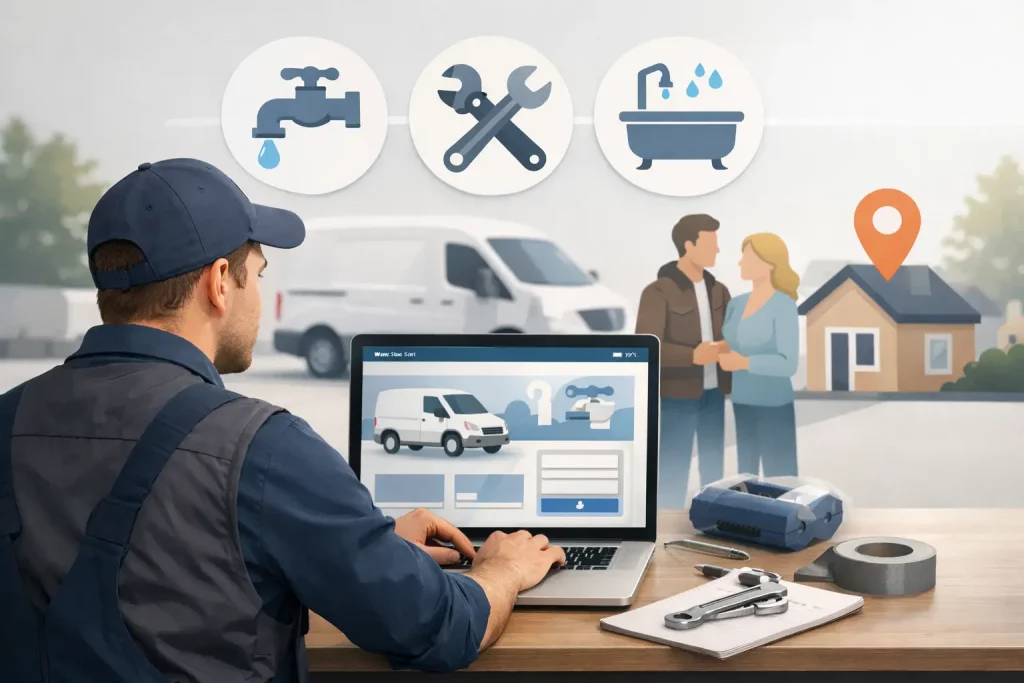
A leaking pipe at 8pm is not the moment someone wants to scroll through a cluttered website. They want to know whether you cover their area, whether you can help, and how quickly they can contact you. Good plumber web design makes those answers obvious, then gives the customer a simple way to call or request a quote.
For a local plumbing business, your website is not there to win design awards. It is there to turn people searching on their phone into real enquiries. That means clear services, local coverage, proof that you are trustworthy, and contact details that are impossible to miss.
What a plumbing website needs to do
A potential customer may arrive on your website from Google, a recommendation, a van QR code or your Google Business Profile. They might have a burst pipe, a boiler issue, a blocked drain or a bathroom job they have been putting off for months. The urgency and value of each job are different, but the next step should always be easy.
Your website needs to explain what you do in plain English, show where you work, and make getting in touch straightforward. If someone has to hunt for a number, wait for a slow page to load or fill out a long form, there is a good chance they will try the next plumber instead.
The best sites also help customers decide whether you are the right fit before they call. A homeowner looking for an emergency repair wants reassurance about response times. Someone planning a new bathroom may want to see examples of finished work. A landlord might need to know whether you handle ongoing maintenance. One site can support all of these enquiries when the information is organised properly.
Plumber web design starts with the mobile customer
Most local plumbing searches happen on a mobile phone. A customer may be standing under a dripping ceiling, sitting in a cold kitchen, or trying to arrange a repair between work and school runs. Mobile usability is not an extra feature. It is the main job.
Your phone number should be visible at the top of every page and work as a tap-to-call button. A clear quote request button should sit alongside it for customers who cannot speak on the phone or are contacting several firms outside working hours. Keep the form short: name, contact details, postcode, job type and a brief description are usually enough to start the conversation.
Large text, clear buttons and quick-loading pages matter more than clever effects. A polished site that makes customers wait is not doing its job. Equally, a very basic one-page site can hold you back if it does not explain your services or build confidence. The right balance depends on the size of your business and the work you want more of.
Make your services clear before customers ask
Many plumbing firms lose enquiries because their website uses broad wording such as “all plumbing work undertaken” and leaves it there. That might be true, but it does not give a customer much confidence that you handle their specific problem.
Set out your core services clearly. This could include emergency plumbing, leak repairs, blocked drains, tap and toilet repairs, radiator work, bathroom plumbing, boiler repairs, central heating, landlord maintenance or installation work. Only list services you genuinely offer. A shorter, accurate list is better than a long one that creates calls for jobs you do not take on.
Each service should answer a few practical questions: what type of work you handle, who it is for, and how the customer can take the next step. You do not need pages of technical detail. Homeowners want to know whether you can solve the issue, whether you cover them, and how to get a quote.
If you offer emergency call-outs, be specific about what that means. Are you available evenings and weekends? Do you cover urgent leaks, loss of heating or blocked toilets? Can customers call directly? Clear expectations protect your time as well as helping the right people contact you.
Show customers that you are local and dependable
Local work is built on trust. People are inviting you into their home or business, often when something has already gone wrong. Your website should remove doubt early.
Start with the basics: your business name, trading area, phone number, opening hours and the types of property you work in. Mention the towns, villages or postcodes you cover where it is useful, without turning the page into a repetitive list of locations. Customers should be able to tell within seconds whether you are close enough to help.
Then add proof. Real job photos are more useful than generic stock images because they show the standard of your work. Before-and-after images can work particularly well for bathroom plumbing, radiator installations and repairs where the result is visible. Keep photographs tidy and well lit, and avoid posting anything that reveals a customer’s address or personal details.
Relevant qualifications, insurance details, years of experience and genuine reviews can also reassure visitors. If you are Gas Safe registered and provide gas work, say so clearly. If you only carry out plumbing, do not blur the line. Accurate information creates more trust than making your business sound bigger than it is.
Give every visitor a clear route to contact you
A website can look professional and still fail if the contact journey is awkward. Customers should not have to choose between digging through pages and giving up.
Use a visible call button, a quote request form and an easy-to-find contact page. These options suit different customers. Some need an immediate answer, while others want to send details and photos when they have a minute. For planned work, a form can help you collect useful information before calling back. For urgent jobs, the phone should take priority.
Avoid forms that ask for too much. A customer with a leaking pipe is unlikely to complete ten fields about their property. You can get the finer details when you speak to them. The goal is to make the first contact feel quick and low effort.
It is also worth setting expectations after the form is sent. A simple message confirming that you have received the enquiry and will respond during your stated hours helps customers feel they have not sent their details into a void.
Do not rely on one source of work
Word of mouth is valuable, but it can be unpredictable. Social media can bring attention, but posts move quickly. Lead platforms may deliver opportunities, but they can also mean paying for access to jobs that several other plumbers are chasing.
Your own website gives your business a dependable base. It is the place you can direct referrals, put on your van signage, add to invoices and use alongside your Google presence. Rather than renting attention from a platform, you are building an asset that explains your business and collects enquiries for you.
That does not mean a website replaces good service, reviews or recommendations. It supports them. When someone is referred to you, they will often look you up before calling. A clear, current website gives that referral more weight and makes it easier for the customer to act.
Keep the website current without adding to your workload
Out-of-date websites damage confidence quickly. An old phone number, services you no longer offer, broken form or expired-looking photos can make a good business appear unreliable. The problem is that most plumbers do not have time to deal with hosting, updates and technical issues between jobs.
That is why ongoing management is often more useful than a one-off build. Your website should be ready to change when your business changes: new service areas, a different mobile number, updated hours, fresh reviews or a new type of work you want to promote. Small updates keep the site useful and accurate.
A monthly service also makes costs easier to plan. Instead of a large upfront bill followed by a website you have to manage yourself, you can have the site, hosting, forms and practical support handled in one place. For a busy sole trader or small team, that can be the difference between having a site that helps and having one that sits unfinished.
A simple website can still win better enquiries
You do not need a complicated online setup to look established. You need a site that loads properly, explains your work, shows local customers why they can trust you and makes contact easy. That is the practical standard to judge it by.
Trade Sites UK builds and manages professional sites for local trades businesses, with a straightforward monthly service and no technical work for you to take on. The aim is simple: get your plumbing business online quickly, keep it looking credible, and give local customers a clear reason to get in touch.
The next customer searching for a plumber is already looking for an answer. Make sure your website gives them one before they call someone else.