
A plumbing homepage has one job: make it easy for a local customer with a leak, boiler problem or bathroom job to contact you. The best homepage sections for plumbers do not try to impress people with clever wording. They quickly show what you do, where you work, why you can be trusted and how to get a quote.
When someone searches on their phone, they are often comparing several plumbers in minutes. If they cannot see a phone number, the right service or proof that you cover their area, they move on. These sections give them the answers they need before they leave.
1. A clear first section with a call to action
The top of the page is the most valuable part of your website. It should say exactly what you do, the areas you cover and what the visitor should do next.
For example: “Reliable local plumber in Leeds for repairs, installations and emergency call-outs.” Under that, place a clear button such as “Request a quote” and a tap-to-call phone number. On mobile, the phone number needs to be immediately visible without scrolling.
Avoid broad claims like “quality services you can trust” on their own. They could apply to any business. A customer wants to know whether you are the right plumber for their job, in their area, right now.
If you offer emergency work, say so here. But only make emergency call-outs your main message if they are genuinely a service you can respond to. Promising 24-hour help when you cannot answer at night will create the wrong kind of enquiry and damage trust.
2. Your main plumbing services
A short services section helps people confirm that you handle their particular problem. This is especially useful when a customer arrives from Google after searching for something specific, such as a leaking tap, toilet repair or boiler installation.
Keep the wording practical. Rather than a long explanation of every possible task, show your most profitable and most common jobs. For many plumbing businesses, that may include plumbing repairs, bathroom plumbing, boiler and heating work, radiator repairs, burst pipes and emergency call-outs.
Each service should have a brief description that explains the outcome. “Bathroom plumbing” is clearer when followed by a line that mentions fitting baths, showers, toilets and pipework. Customers do not need a technical lesson. They need confidence that you can take the job on.
Do not list services you do not want. A website that brings in work you regularly turn down is not helping the business.
3. The locations you cover
Local work depends on local clarity. A dedicated homepage section for your service area can stop wasted calls and reassure customers that you are nearby.
Name your town, city or main area, then include a sensible selection of surrounding places. For example, a plumber based in Bristol might state that they cover Bristol, Kingswood, Bedminster, Filton and nearby areas. Keep it honest. Saying you cover half the country can make a small local business look less reliable, not more.
This section matters because people often choose the tradesperson who looks closest and easiest to book. It also supports the local focus of the rest of the page without filling every paragraph with place names.
4. A simple reason to choose you
Most plumbers offer similar core services. This section is where you explain why a customer should ring you rather than the next result.
The strongest points are usually operational, not flashy. You might offer clear quotes before work starts, tidy workmanship, flexible appointment times, fully insured work, fast responses or experience with landlords and letting agents. If you are Gas Safe registered and carry out gas work, make that clear too.
Write this as a short, direct section, not a collection of vague badges. “We turn up when agreed, explain the work clearly and leave your property tidy” is more believable than simply saying you provide excellent customer service.
Trust signals work best when they match how you actually run the business. If you work alone, the personal service and direct contact with the person doing the job can be a real advantage. If you have a team, customers may value capacity and quicker availability.
5. Reviews from real customers
A good review section can do more for new enquiries than another paragraph about your experience. Plumbing customers are inviting someone into their home, often when something has gone wrong. They want evidence that you are reliable, fair and competent.
Use a handful of short reviews that mention the qualities people care about: arriving on time, explaining the issue, completing the repair properly and charging fairly. First names and local areas can make reviews feel more credible, provided you have permission to use them.
Do not hide all your reviews on a separate page. Put the best ones on the homepage, close to the sections where visitors are deciding whether to contact you. If you have only a few reviews so far, use them. Three genuine reviews are better than none.
6. Photos of your work and your team
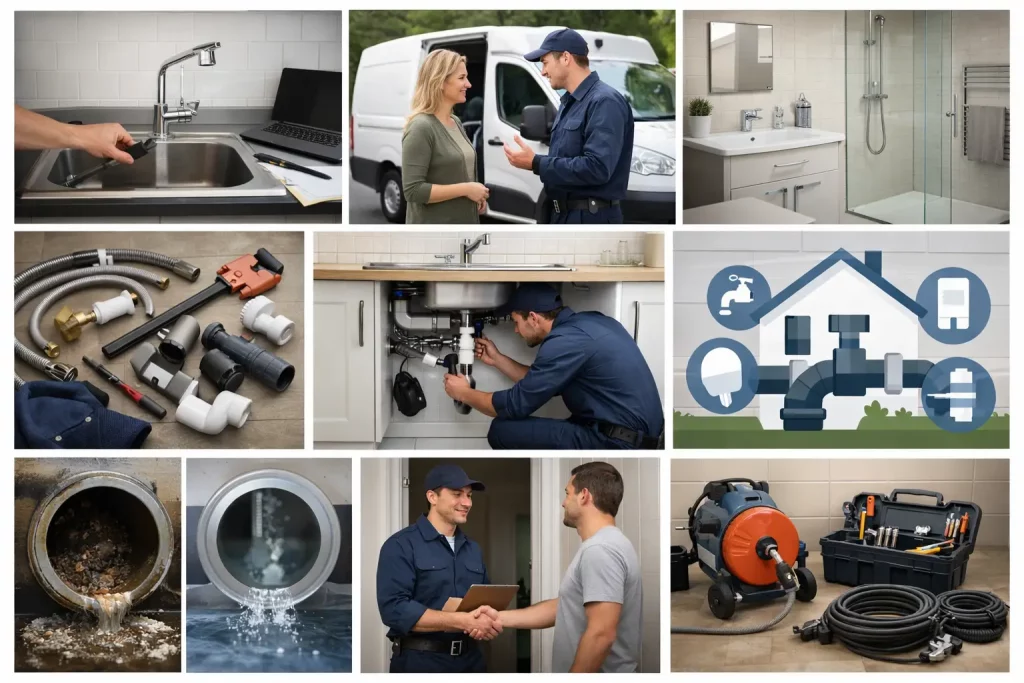
Photos help a plumbing business feel real. A clean image of a completed bathroom, a neatly installed boiler, a van with your branding or you on site gives customers more confidence than generic stock images.
You do not need dozens of pictures. A small, well-chosen gallery is enough. Focus on work that reflects the jobs you want more of. If bathroom installations are a key part of your business, show finished bathrooms. If repairs and call-outs are your bread and butter, show clean, professional work in progress where appropriate.
There is a trade-off here. Poorly lit, cluttered or blurry photos can make a good job look less professional. It is worth taking a moment to get clear pictures once the work area is tidy and the job is complete.
7. A straightforward quote request form
A contact form should reduce effort, not create it. Ask for the essentials: name, phone number, email, postcode, service required and a short description of the job. A photo upload option is useful for leaks, damaged pipework or bathroom work, but it should not be compulsory.
Long forms lose enquiries. A customer with water coming through a ceiling is not going to fill in ten fields. They want to explain the problem and hear back quickly.
Place a quote form lower on the page after visitors have seen your services, reviews and local coverage. Keep another call-to-action near the top for people who are ready to contact you immediately. The form should also confirm what happens next, such as “I will get back to you within one working day.” Only promise a response time you can meet.
8. Your process and what happens next
People are more likely to enquire when they know what to expect. A short process section removes uncertainty, particularly for larger jobs such as bathroom plumbing, boiler replacements or ongoing landlord maintenance.
You can explain it in three simple steps within a paragraph: get in touch, receive a clear quote or visit where needed, then book the work at a suitable time. This shows that dealing with you will be organised without making the page feel overcomplicated.
For smaller repairs, explain whether you can provide an estimate from photos or whether the fault needs to be inspected first. Clear expectations protect your time and help prevent arguments over pricing later.
9. A final contact section that makes action easy
The bottom of the homepage is a second chance to win the enquiry. Repeat your phone number, quote form and service area, then give the customer a direct reason to act. “Need a local plumber? Call now or send your job details for a quote” is enough.
This is also a sensible place to show your working hours. If you only take calls during normal hours, say so. If you provide out-of-hours emergency help, explain how customers should contact you.
A strong plumbing homepage is not about adding every possible section. It is about putting the right information in the right order, then making contact simple. For busy plumbers, Trade Sites UK can put those essentials in place and manage the ongoing updates, so your website keeps working while you get on with the jobs.