
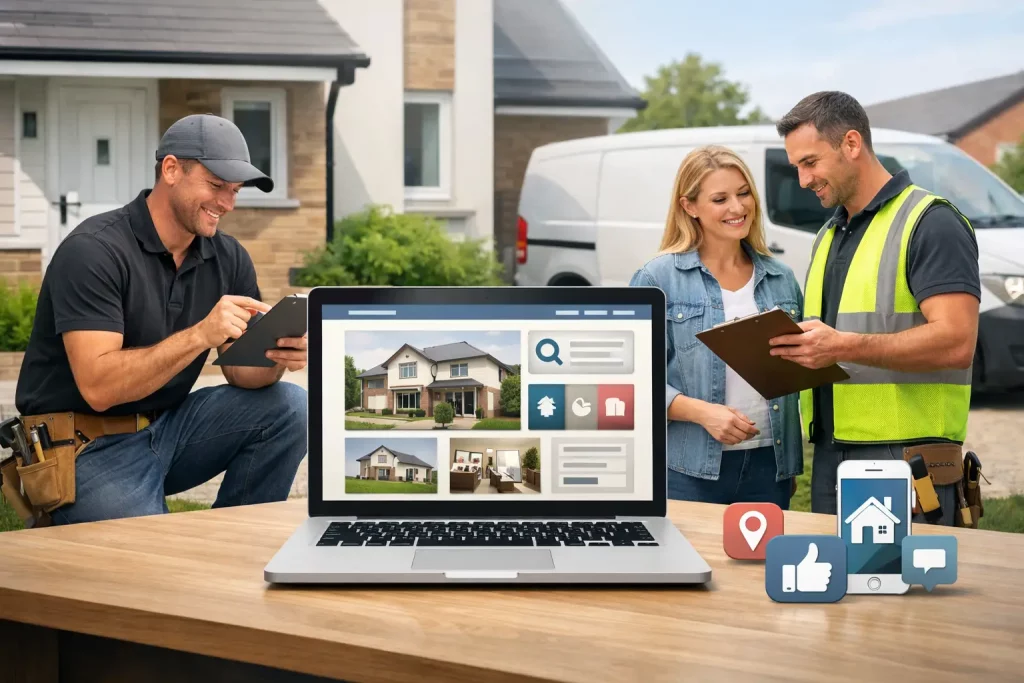
A guide to local websites for builders should not be about flashy effects or pages nobody reads. It should be about one thing: making it easy for local homeowners, landlords and businesses to see what you do, trust your work and ask for a quote.
Builders often win work through recommendations, and that will always matter. But a recommendation usually leads to a quick Google search. If your business is hard to find, looks out of date or gives no clear way to get in touch, a potential job can go to the next firm before you have even heard about it.
What a local builder website needs to do
A good local website works like a reliable member of the office team. It answers the common questions, shows the quality of your work and points visitors towards a phone call or quote request. It should do that properly on a mobile, because many customers will be searching while standing in a kitchen, looking at a damaged wall or planning work after hours.
The priority is clarity. Within a few seconds, a visitor should know your business name, the type of building work you take on, the areas you serve and how to contact you. They should not have to hunt through menus or fill in a long form just to ask whether you cover their postcode.
For most small building firms, the site also needs to make a strong first impression before a customer calls. Building work can involve large budgets, disruption at home and a lot of trust. A tidy, professional site with real project photos and straightforward information helps customers feel more comfortable getting in touch.
Make your services clear
Avoid a vague statement such as general building services and leave it at that. Explain the work you want to win, whether that is extensions, renovations, loft conversions, brickwork, structural alterations, garden rooms, property refurbishments or smaller repairs.
You do not need a separate page for every possible task. In fact, too many thin pages can make a small business look less focused. A sensible approach is to group related services together and give each one enough detail for a customer to recognise that you handle their type of project.
Be realistic about the work you want more of. If you mainly take on domestic extensions and renovation projects, say so. If you prefer insurance repairs or landlord maintenance, make that obvious. The right website filters out unsuitable enquiries as well as bringing in better ones.
Put your service areas in plain sight
Local customers want a quick answer to one question: do you work here? Name your main town, city or surrounding areas in natural language on the site. This gives people confidence to contact you and helps Google understand the areas your business serves.
There is a balance here. Listing every village within an hour’s drive is not useful if you would not travel there for a typical job. Focus on the places you genuinely cover, and update the details if your working area changes.
The pages that earn enquiries
A builder’s website does not need to be big. It needs the right pages, written for people deciding who to call. For many firms, a clear homepage, services page, projects or gallery page, about page and contact page are enough to start producing results.
Your homepage should lead with what you do and where you work. It should include a visible phone number and a simple route to request a quote. Do not make visitors scroll to the bottom to find either one.
A services page gives more detail about the work you carry out. Keep it practical. Tell customers what is included, the sorts of projects you commonly take on and whether you manage the job from start to finish. Where relevant, mention qualifications, insurance, guarantees or established experience, but only where you can back up the claim.
A projects page is especially valuable for builders. Before-and-after photographs, completed extensions, renovations and outdoor work give people evidence that words alone cannot provide. Use real images from your own jobs where possible. A handful of strong examples is better than a gallery full of dark, rushed photos.
Your contact page should be simple and direct. Include your phone number, email address and a short quote form. Ask for the useful basics: name, contact details, location, type of work and a short description. Long forms put people off, particularly on a phone.
Trust matters before the first call
Customers are not only choosing a price. They are choosing who they are comfortable having in or around their property, often for weeks or months. Your website needs to reduce that uncertainty.
Start with the basics: a consistent business name, clear contact details and a professional email address. Add genuine reviews where you have permission to use them, along with photos of your team, van signage or completed work. These details make a business feel established and accountable.
It also helps to explain how you work. For example, you might say that you visit the property, discuss the scope, provide a written quote and agree a start date before work begins. That small amount of information reassures customers who have never hired a builder before.
Do not overpromise. Claims such as cheapest in the area or no job too big or small can sound generic and create the wrong expectations. Specific, honest information tends to bring better conversations and fewer time-wasting enquiries.
A local website must work on mobile
A polished site that is awkward on a phone will cost you enquiries. Local searches are often quick and urgent. Someone may be looking for a builder during a lunch break, on the school run or after finding a problem at home. They need to be able to tap to call, see your services and send a message without zooming in or fighting with the page.
Fast loading also matters. Large image files, unnecessary pop-ups and complicated layouts can slow a site down. Project photos are useful, but they should support the enquiry process rather than get in the way of it.
The same goes for calls to action. Keep the wording straightforward: Call for a quote, Request a callback or Tell us about your project. Customers do not need clever wording. They need to know what happens next.
Google setup and ongoing upkeep
Your website and your Google Business Profile should tell the same story. The business name, telephone number, services and service areas need to be accurate and consistent. This makes it easier for customers to recognise you when they find your business through Google Maps or local search results.
A website is not something to launch and forget. Phone numbers change, new services are added, project photos build up and customer expectations move on. If a form stops working or an old email address remains on the site, you can miss work without knowing it.
That is why ongoing management is useful for busy builders. A managed service can deal with hosting, site changes, quote forms and Google setup while you stay focused on jobs. Trade Sites UK is built around that simple idea: a professional local presence without the upfront cost, contracts or technical admin that often puts tradespeople off.
What to avoid when choosing a builder website
Be cautious of anything that sounds impressive but does not help a customer contact you. A site can have animation, jargon and dozens of pages yet still fail at the basics. If it does not clearly show your work, explain your service area and make enquiries easy, it is not doing its job.
Also avoid being tied into a service where you cannot update essential business details or where the monthly cost is unclear. You need a predictable setup that can grow with the business, not another supplier to chase when a phone number changes.
Finally, do not judge the website only on how it looks on a large computer screen. Open it on a phone. Try calling from it. Send a test quote request. If those actions feel quick and straightforward, customers are more likely to follow through too.
The best local website for a builder is not the one with the most features. It is the one that gives a nearby customer enough confidence to make contact, then gives you a dependable way to turn that interest into the next good job.