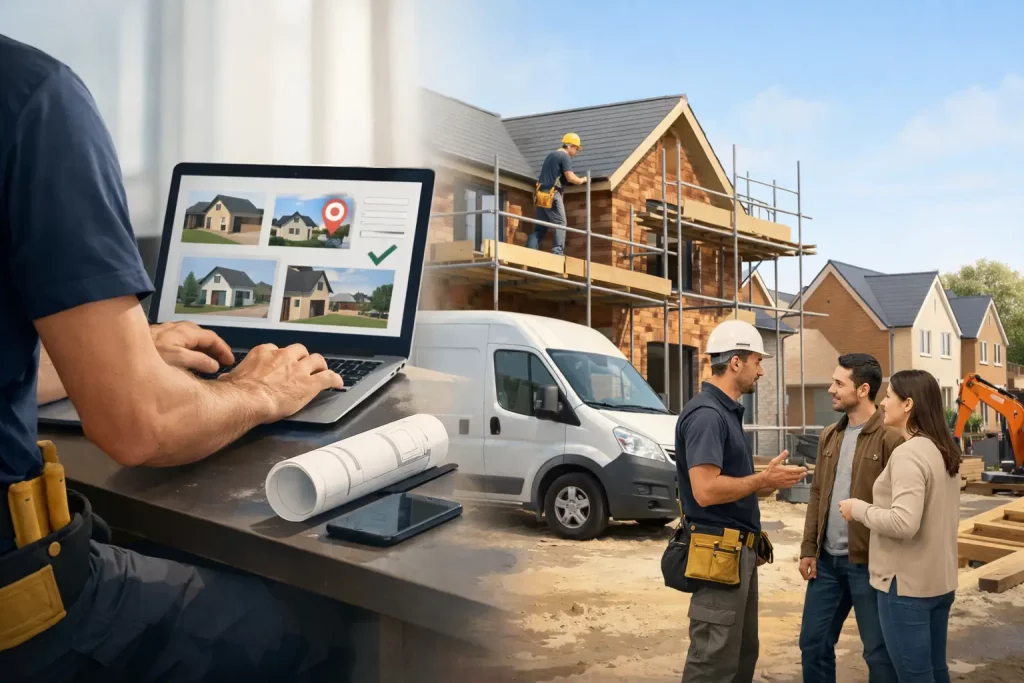
A homeowner has found your number, seen a recommendation, or spotted one of your jobs nearby. Before they call, they usually want to check who you are, what work you take on and whether your business looks trustworthy. That is why do builders need websites is such a practical question. A good site gives local customers the confidence to contact you while they are ready to discuss the job.
For building firms, the work is often high value and takes planning. Customers are not always looking for the cheapest quote. They want a builder who turns up, understands the job and can show clear evidence of good work. Your website should make that decision easier, without adding another job to your already full week.
Why do builders need websites when referrals still matter?
Word of mouth is valuable, and it will always matter in the building trade. But a referral often leads to an online check. A neighbour may say you did a great extension, yet the homeowner will still search your business name, look at your photos and see whether they can easily get in touch.
If they find no website, an old social media page or a listing with limited information, they may hesitate. It does not mean your work is poor. It means they have not been given enough reassurance to take the next step.
A professional website supports the referrals you already earn. It puts your services, contact details and completed projects in one place, so a potential customer can move from recommendation to enquiry without having to chase information.
It also helps when people search for a builder before asking anyone they know. Someone planning a loft conversion, renovation, garden wall or extension may start with Google. A clear local website gives your business a chance to appear credible at that first point of contact.
Building jobs need more trust than a quick call-out
A customer booking a small repair may be happy to make a quick phone call. A customer considering a larger building project will usually spend more time comparing options. They may be inviting a contractor into their home for weeks or months, committing a significant budget and making decisions that affect their property.
Your website cannot replace a proper site visit, clear quote or good communication. It can, however, make it much more likely that you get that first conversation.
The best builder websites answer the sensible questions before the customer has to ask them. What type of work do you carry out? Which areas do you cover? Do you handle extensions, renovations, structural work or smaller building jobs? How can someone request a quote? When those answers are easy to find, the enquiry feels lower risk for the customer.
Photos matter too, particularly for work that changes how a home looks or functions. Finished kitchens, extensions, brickwork, landscaping structures and refurbishments give people something real to assess. A few clear project images with a simple description are more useful than vague claims about being the best in the area.
A website helps you attract the right enquiries
Not every lead is worth pursuing. Builders can lose a lot of time on calls from people outside their service area, looking for work they do not offer, or expecting a price before anyone has seen the property.
A website lets you set expectations early. If you focus on house extensions and major renovations, say so. If you also take on smaller jobs between larger projects, make that clear. If you work across particular towns or postcodes, include them in plain language.
This helps customers decide whether you are a fit before they contact you. The result is not necessarily more calls at any cost. It is a better chance of receiving enquiries that suit the work you want to do.
A quote request form is particularly useful here. Instead of relying only on missed calls and messages, you can ask for the basics: the type of project, location, rough timing and contact details. That gives you enough context to decide how to respond and keeps the enquiry organised.
Your website is a business asset you control
Many builders rely on a mixture of referrals, Facebook groups, social media and lead platforms. These can all produce work, but none should be your only source of enquiries.
A social profile can be useful for sharing recent work, but posts quickly disappear down the feed. Lead platforms may put you in front of customers, yet they can also mean competing with several other firms and paying for access to opportunities that may not be right for you.
Your own website works differently. It is the place you send people when they ask what you do. It gives your business a consistent home online, rather than relying on a platform’s rules, pricing or changing visibility.
That does not mean a website will instantly fill your diary. Results depend on your area, competition, services, reviews and how quickly you follow up enquiries. But it gives every recommendation, Google search and social post somewhere useful to land. Without it, interested customers have less reason to choose you over the next builder they find.
What a builder website should include
A builder does not need a complicated website with pages no customer will read. It needs to be straightforward, professional and built around getting people in touch.
At a minimum, customers should be able to see:
- the building services you provide, written clearly rather than hidden behind trade jargon
- the areas you cover, so local customers know you are relevant to their job
- examples of completed work that show the standard and range of your projects
- a phone number and simple quote request form that work properly on a mobile
It should also include basic business details and a clear sense that there are real people behind the company. This is especially useful for independent builders and smaller firms competing against larger businesses with bigger advertising budgets.
Mobile use is not an optional extra. Many people will look for a builder in the evening from their phone, often while standing in the room they want changed. If the site is slow, hard to read or makes them hunt for a contact number, they may leave and try someone else.
The cost of doing nothing is often missed opportunities
Some builders put off getting a website because they assume it will be expensive, technical or another thing to maintain. That concern is fair. Traditional web projects can involve large upfront costs, lengthy delays and a lot of back-and-forth when you would rather be on site.
But doing nothing has a cost as well. It can mean referrals going cold after an online search, missed enquiries when you cannot answer the phone, or paying repeatedly for lead sources that you do not own.
The right approach depends on the size of your firm and the work you are targeting. A builder with a full diary from repeat clients may not need a large website. Even then, a simple professional site can protect the reputation they have built and make future growth easier. A newer firm, or one looking to take on more local projects, will usually benefit from having a clear online presence sooner rather than later.
The key is to avoid turning it into a major project. Your website should support your business, not demand weeks of your time or leave you dealing with technical problems after launch.
A practical way to get online without the hassle
For most builders, the best website is not the flashiest one. It is the one that is live quickly, looks professional on a phone, explains the work properly and makes it easy for local customers to request a quote.
That is the thinking behind Trade Sites UK: a straightforward monthly service that handles the website, hosting, updates, forms and Google setup for trade businesses. There are no upfront web project headaches to manage while you are trying to run jobs, speak to customers and keep work moving.
A good website will not win a project on its own. Your workmanship, communication and quote will still do the real selling. But it gives potential customers a reason to call you first – and a simple way to do it when they are ready.