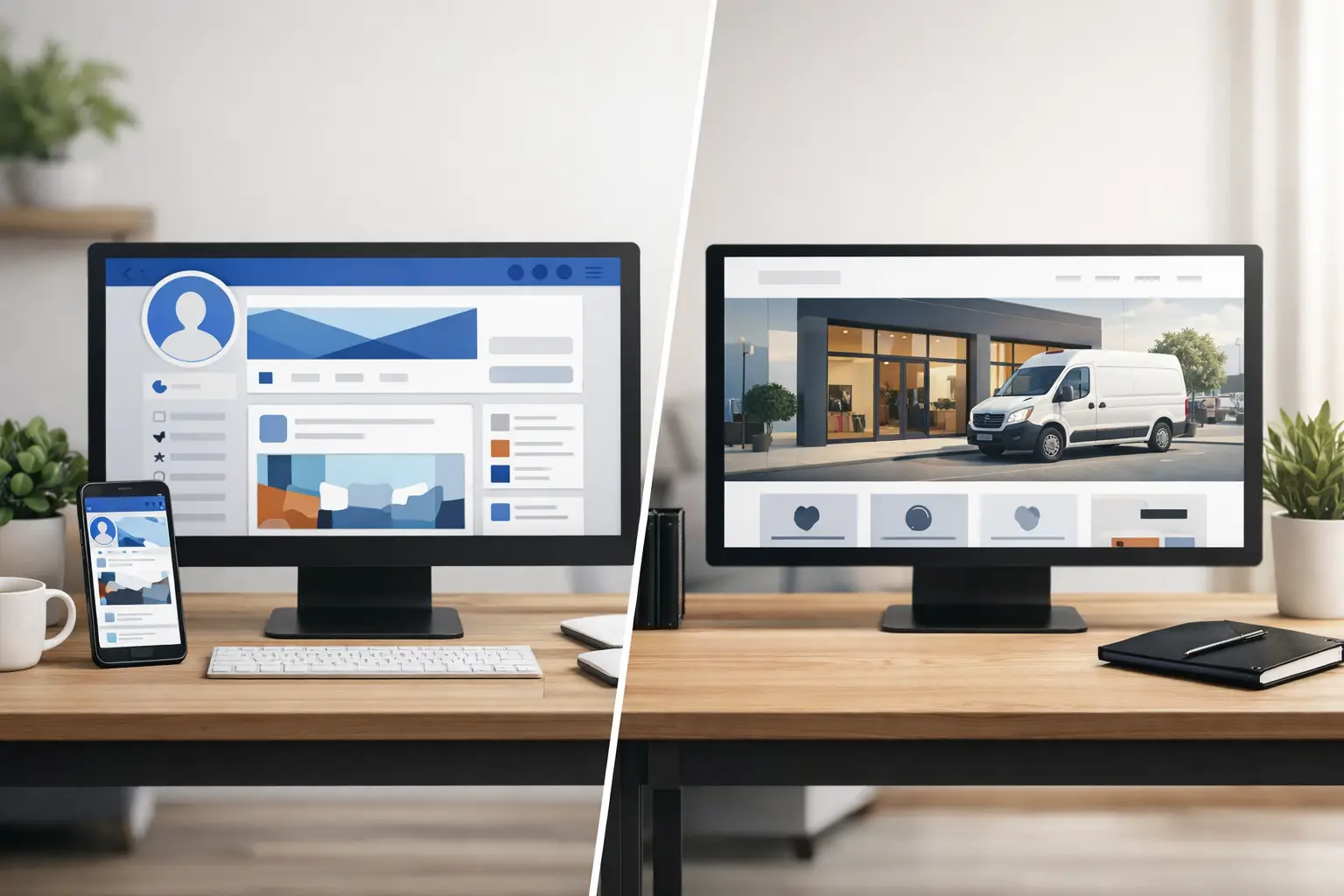
A lot of trades businesses start with Facebook because it is quick. You can set up a page, add a few job photos, ask customers for reviews, and feel like you are online. But when it comes to Facebook page vs business website, the real question is simple: which one helps you win more local enquiries without wasting time?
For most plumbers, electricians, builders, roofers and other trades, Facebook can help people recognise your name. A business website helps them take action. That difference matters when someone needs a quote, wants to check you are legitimate, or is comparing you with two other local firms.
Facebook page vs business website: what is the real difference?
A Facebook page lives on someone else’s platform. Your website is your own online base. That affects everything from how customers find you to how they get in touch.
With Facebook, people usually scroll past your posts unless they already follow you or your content gets engagement. A website is built around intent. Someone searches for a service, lands on your site, sees what you do, where you work, and how to request a quote. They are closer to booking.
That does not mean Facebook is useless. It can still be handy for showing recent work, posting updates, and giving people another place to check you out. But it is not a strong replacement for a proper website if you want steady local enquiries.
Why a Facebook page feels easier at first
There is a reason many trades rely on Facebook in the early days. It is familiar, free to start, and easy enough to update from your phone between jobs. You can post photos from site, reply to messages, and ask happy customers to leave a review.
If you are busy on the tools, that convenience is appealing. You do not need to think about hosting, layout, forms, or anything technical. It feels like less hassle.
The problem is that easy to start does not always mean effective long term. A Facebook page often works best for people who already know your name, have been referred to you, or happen to come across a post. It is weaker when someone is actively looking for a local tradesperson and wants quick proof that you are the right choice.
Where Facebook pages fall short for trades
The biggest issue is control. Facebook decides how your page is displayed, how much of your audience sees your posts, and what features matter this month. If the platform changes, your business has to adapt.
There is also the issue of distraction. A potential customer visits your page and, within seconds, they can be pulled away by notifications, adverts, or another local business. Even if they like what they see, Facebook is not designed to keep people focused on one next step.
Then there is credibility. Some customers will absolutely check your Facebook page. Others will see a business with no website and assume it is smaller, newer, or less established than the competition. Fair or not, people often expect a proper website when they are spending serious money on work to their home.
Messaging can also become messy. Leads arrive in comments, Messenger, or missed notifications. If you are on a job, it is easy to lose track. That means slower replies and missed opportunities.
What a business website does better
A good website gives customers a clear path. They land on the page, see your trade, your service area, examples of work, and a simple way to call or request a quote. No distractions. No scrolling past other people’s content. Just your business.
That clarity makes a difference. Most people looking for a tradesperson want answers quickly. What do you do? Where do you work? Can I trust you? How do I get in touch? A website can answer all of that in under a minute.
It also helps you look established. You do not need a flashy site with loads of extras. In fact, most local trades businesses are better off with something simple, tidy and built around enquiries. Clean service pages, mobile-friendly layout, and an obvious quote form usually do more than fancy features ever will.
A website is also a stronger base for Google visibility. If someone searches for a plumber in their area or an electrician nearby, a proper website gives them somewhere solid to land. That matters far more than hoping they happen to see a Facebook post at the right time.
Facebook page vs business website for trust and enquiries
If the goal is getting more local jobs, trust and ease of contact matter most. This is where the gap gets wider.
A website lets you present your business properly. You can show the services you offer, the areas you cover, before and after photos, customer reviews, and a direct enquiry form. Everything is organised. Everything has a job to do.
On Facebook, the same information is often scattered. Reviews are in one tab, photos in another, services somewhere else, and important details can be buried under old posts. Customers should not have to hunt around to figure out whether you are right for the work.
The best websites also work harder while you are busy. Someone can visit at any time, fill in a form, and send an enquiry even if you are up a ladder, under a sink, or on another callout. That makes your online presence more dependable.
When Facebook still has a place
This is not an either-or decision for every business. In many cases, Facebook works well as a support channel. It can help you share recent jobs, stay visible to past customers, and add a bit of social proof.
If someone has been referred to you by a neighbour, they may check your Facebook page for photos and reviews before calling. That is useful. But they will often want a website too, especially if they are comparing quotes or looking for reassurance that you are established and easy to deal with.
Used together, Facebook and a website can do different jobs. Facebook helps with visibility and familiarity. Your website handles trust, clarity, and conversion.
What most trades businesses actually need
Most small trades firms do not need a big online setup. They need something that gets enquiries without creating more admin.
That usually means a straightforward website with your trade clearly explained, your service area listed, strong mobile usability, and an easy quote form. It should load quickly, look professional, and make contacting you simple. Then, if you want, you can keep Facebook active with the odd job update and point people back to your site when they are ready to enquire.
This is where many business owners get stuck. They know a website would help, but they assume it will be expensive, slow to sort out, or another technical headache. It does not have to be. A managed service built for trades can remove most of that friction by handling the setup, hosting, updates and forms for you. Trade Sites UK is built around exactly that approach, which is why it suits busy contractors who want a proper online presence without having to mess about with it themselves.
So which should you choose?
If you can only have one, choose the website.
A Facebook page is useful, but it is not a reliable foundation for your business. You do not own the platform, you do not control how people find you, and it is not the best place to turn interest into enquiries. A website gives you more control, a better customer journey, and a stronger chance of winning work from people who are ready to book.
If you already have a Facebook page, keep it. Just do not expect it to do the full job on its own. Think of it as a shop window on a busy street. Your website is the office where the work actually gets booked.
For trades businesses, that difference is not just about marketing. It is about making it easier for the right customers to trust you, contact you, and choose you.
The best online setup is usually the one that saves you time while bringing in better enquiries. If your Facebook page is getting likes but not enough quote requests, that is usually your answer.