
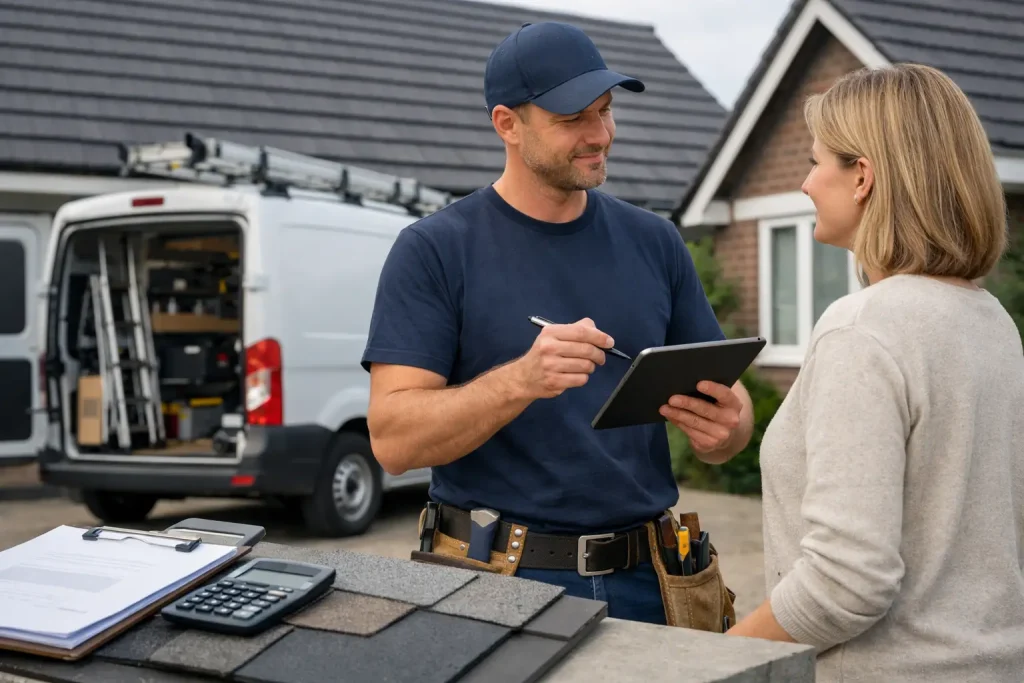
If your phone is quiet but you know people in your area need roofing work, the problem is rarely demand. More often, it is that local customers cannot find you quickly, cannot tell if you cover their job, or cannot see an easy way to ask for a price. That is the real issue behind how to get roofing quote requests – making it simple for the right people to trust you and get in touch.
Most roofers do not need more marketing theory. They need more local enquiries from homeowners, landlords and businesses who are ready to ask for a quote. That means your online presence has to do three things well. It needs to show up when people search locally, look credible straight away, and give visitors a fast path to contact you without any hassle.
How to get roofing quote requests from your website
A roofing website does not need to be clever. It needs to be clear. When someone lands on it, they should know within a few seconds what you do, where you work, and how to request a quote.
That sounds obvious, but many trade websites miss the basics. They lead with vague wording, hide contact details, or make people dig around to work out whether the business even covers their town. A customer with a leaking roof will not spend ten minutes figuring that out. They will go back to Google and try the next roofer.
Your homepage should make the essentials obvious. Say that you provide roofing services, name the areas you cover, and put a clear quote form or phone number in view straight away. If you handle emergency roof repairs, say so. If you focus on re-roofing, flat roofs, chimney work or fascia and soffit replacements, make that visible too. Specificity helps people self-qualify, and that leads to better quote requests rather than time-wasting calls.
The contact route matters just as much as the wording. Some customers want to call now. Others would rather send details in a form, especially if they are comparing a few companies outside working hours. If your site only offers one option, you will lose some of those enquiries.
Be clear about your roofing services and areas
A lot of missed enquiries come down to uncertainty. People are happy to ask for a quote when they feel confident you handle their type of job and actually work in their location.
That is why service pages and area coverage matter. You do not need dozens of pages stuffed with marketing language. You need a straightforward page structure that tells people exactly what you offer. One page for roof repairs, one for new roofs, one for flat roofing, one for guttering and roofline work, if those are services you provide. Keep the language plain and practical.
Then make your service area easy to understand. If you cover Leeds and the surrounding towns, say that clearly. If you only work within a certain radius, say that too. It is better to filter out the wrong leads early than waste time on calls from outside your patch.
There is also a trust benefit here. A roofer who names local areas feels established and real. A site that just says “I work across the UK” or stays vague feels less believable for a local trade service. Most people want somebody nearby who can inspect the roof without delay and come back if needed.
Trust is what turns visits into quote requests
Roofing is not an impulse purchase. Customers are often dealing with a problem that feels urgent, expensive or both. They want reassurance before they fill in a form.
This is where many roofers lose work. They may be good at the job itself, but their online presence does not give enough proof. A basic website with no photos, no local signals and no clear business details can make even a legitimate company look uncertain.
The strongest trust signals are simple. Use real photos of your work. Show completed jobs, not stock images. Include your business name, phone number and service areas consistently. Add a short explanation of the types of projects you take on. If you have reviews, show them. If you are insured or have relevant accreditations, mention them without overdoing it.
Customers are asking themselves basic questions. Is this roofer genuine? Do they do this type of work? Can they come to my area? Will they actually get back to me? Your site should answer all of that quickly.
There is a balance, though. Too little information creates doubt. Too much clutter creates friction. A roofing website should not read like a brochure full of filler. It should help people move from interest to enquiry with confidence.
Make quote forms easy to fill in
If you want to know how to get roofing quote requests more consistently, look closely at your form. This is where a lot of websites let good leads slip away.
A long, awkward form puts people off. So does a form that asks for unnecessary details before they even know if you can help. For most roofing businesses, the best quote form is short and practical. Name, phone number, postcode, a brief description of the job, and maybe the option to upload a photo if that is useful. That is usually enough to start the conversation.
Position matters too. If the form is buried on a contact page, fewer people will use it. It should appear in obvious places across the site, especially on the homepage and service pages. Mobile layout is critical here because many customers will be searching from their phone. If the form is awkward on mobile, or the call button is hard to tap, you are making it harder than it needs to be.
Speed of response also affects future enquiries. If someone fills in a quote form and hears nothing for a day or two, trust disappears. A working website is not just about design. It is also about having forms delivered properly, notifications set up, and a simple process for replying quickly.
Google visibility matters, but relevance matters more
Roofers often assume they need a complicated online strategy. In reality, most local quote requests come from being visible for the right searches and having a site that converts.
If somebody searches for a roofer in their town, your business needs a proper local presence. That includes a professional website, accurate business details, and clear location signals. It does not mean chasing every possible keyword or trying to compete nationally. For a small roofing business, local intent is what matters.
The important point is this: visibility alone is not enough. You can appear in searches and still lose the enquiry if the website looks dated, the areas are unclear, or the path to contact is weak. Getting found and getting chosen are two separate jobs. Your site needs to handle both.
That is why a focused trade website usually performs better than a generic online presence. It is built around what a local customer actually wants to see before making contact, rather than trying to impress with unnecessary extras.
The leads you own are worth more than rented leads
Many roofers rely on third-party lead platforms because they seem quick. Sometimes they do produce work. But there is a trade-off. You are paying for access to enquiries that are often shared, price-driven and inconsistent.
A website that brings in your own quote requests works differently. The customer comes to you, on your brand, through your contact form or phone number. That usually means less competition at the point of enquiry and more control over the process.
It takes a little setup to get right, but once it is in place, it becomes a steadier asset for the business. You are not starting from scratch every month, and you are not depending entirely on referrals that may come and go.
For busy roofers, that is often the biggest shift. Not more marketing activity for the sake of it, just a simple system that helps local customers find you and request a quote without friction. That is the kind of setup services like Trade Sites UK are built around – practical, managed, and focused on getting real local enquiries rather than adding more admin to your week.
What usually stops roofers getting more enquiries
In most cases, the issue is not that the roofer is bad at the trade. It is one of a few common problems. The website is missing or outdated, the business looks hard to contact, the service area is unclear, or the site does not build enough confidence for someone to take the next step.
The fix is rarely complicated. A clear website, proper mobile layout, visible phone number, straightforward quote form, and local service information will do more for enquiries than vague marketing claims ever will.
It is also worth being realistic. Not every visitor will become a lead, and not every lead will be the right job. That is normal. The goal is not maximum volume at any cost. It is a steady flow of relevant roofing quote requests from the areas and job types you actually want.
If you make it easy for local customers to understand what you do, trust that you are genuine, and contact you in seconds, more of them will ask for a quote. And when that system is working quietly in the background, winning the next job becomes a lot less reliant on luck.