
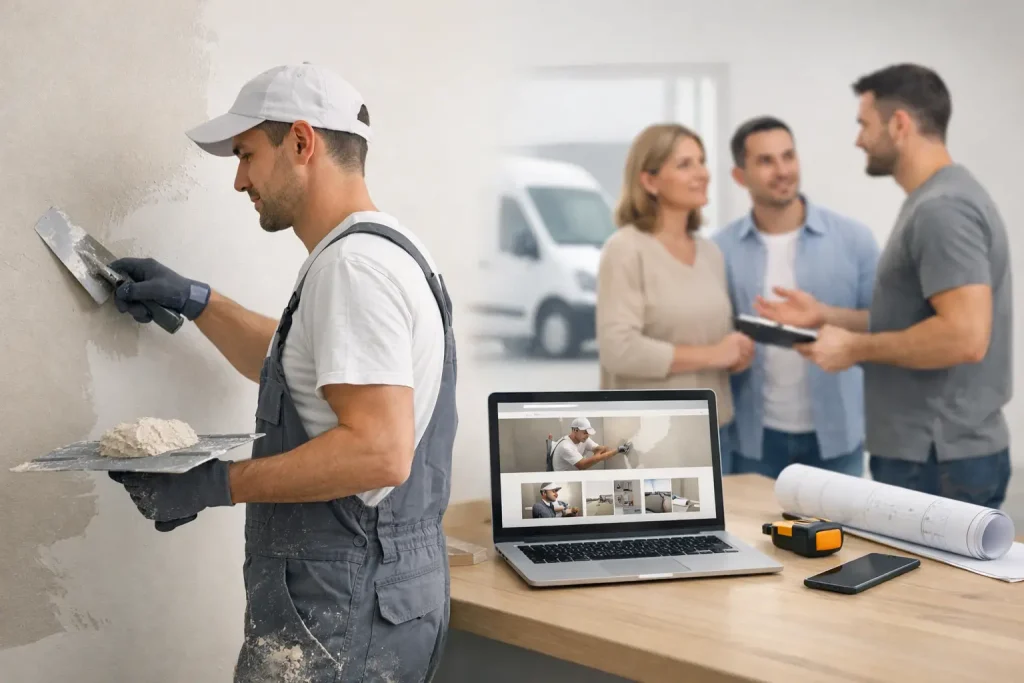
Most plasterers do not lose work because they are bad at the job. They lose it because the customer cannot find them quickly, cannot check they look credible, or gives up trying to get a quote. That is where a website for a plastering business starts to matter. Not as a vanity project, but as a simple tool that helps local people choose you and get in touch without any hassle.
If you rely mostly on word of mouth, you already know the problem. Some weeks are busy, other weeks go quiet. Referrals are useful, but they are not predictable. Social media can help, but posts disappear fast and rarely give customers all the information they want. Lead platforms can send enquiries, but they also put you in a race with other trades and take a cut one way or another. A proper website gives you your own place online, where local customers can find you, trust you and contact you directly.
What a website for a plastering business should actually do
A good plastering website does not need to be clever. It needs to do a few important jobs well.
First, it should make it obvious what you do and where you work. If someone lands on your site, they should know within seconds whether you cover their area and whether you handle the type of work they need, whether that is skimming, rendering, patch repairs, plasterboarding or full room plastering.
Second, it should make you look established. Most customers are not experts in plastering. They judge by what they can see. A clean, professional website gives them confidence that you will turn up, communicate properly and do the work to a decent standard. That matters just as much for small domestic jobs as it does for larger renovation work.
Third, it should make contacting you easy. If people have to hunt for a phone number or fill in a long form, some will not bother. The best trade websites keep it simple – clear call buttons, a straightforward quote form and contact details that are easy to spot on mobile.
Finally, it should help you show up when local customers search. If someone types in a plasterer near them, your website should support that local visibility by clearly showing your trade, your service areas and the type of jobs you take on.
Why plasterers need a different kind of website
Plastering is a trust-based trade. Customers are inviting you into their home, often during messy renovation work, and they want reassurance before they make contact. They are not looking for flashy design. They want proof you are real, local and capable.
That means the right website for a plastering business is usually simpler than people think. It should work well on a phone, load quickly, and answer the questions customers ask before they pick up the phone. Can you do the job? Do you cover my area? Can I see examples? How do I get a quote?
There is also the reality of how trades businesses operate. You are on site, pricing jobs, chasing materials and trying to keep the diary full. You do not need a website that creates more work for you. You need one that runs quietly in the background and turns visits into enquiries.
The pages that make the biggest difference
Most plasterers do not need a huge website. In fact, too much clutter can get in the way. A smaller site with the right pages will usually perform better.
A strong homepage is the starting point. It should say clearly that you are a plasterer, list the main services you offer, mention your location and prompt people to call or request a quote. This is not the place for vague wording. Straight facts win.
A services page matters because customers often search for specific jobs rather than general plastering. Someone might want ceiling repairs after a leak, skimming for a fresh redecoration, or external rendering for a tired-looking wall. Clear service sections help people see that you do exactly what they need.
An areas covered page helps with local trust. People want to know if you work in their town or nearby. If you serve several areas, that should be obvious without making them guess.
A gallery or recent work section can do a lot of heavy lifting. Plastering is visual. Even simple photos of clean finishes, newly skimmed walls and completed rooms can reassure a customer that you know what you are doing. The key is using real work, not stock images that make the site look generic.
A contact page should be simple and direct. Name, number, service area and a short quote form are enough. If it feels like admin, you have made it too complicated.
What customers look for before they enquire
Customers make quick decisions online. They are not reading every word. They are scanning for signs that you are the right fit.
They want to see a genuine local service, not a faceless business. They want recent work, clear wording and a direct route to contact. They also want reassurance that they are dealing with someone dependable.
That is why small details matter. A proper business name, a mobile-friendly layout, visible phone number, decent photos and clear service descriptions all build confidence. Reviews help as well, especially when they mention reliability, cleanliness and quality of finish.
Price is part of the picture, but it is rarely the only factor. Many homeowners will pay a fair rate if they feel confident you will do the job properly and keep things straightforward. Your website should support that feeling from the first click.
Common mistakes that cost plasterers enquiries
The biggest mistake is having no website at all and relying on a social media page. Social platforms are useful, but they are not a solid home for your business. They can look patchy, bury key information and send customers off in too many directions.
The next issue is a website that says very little. If it just shows a name and a number, it misses the chance to answer concerns and build trust. People want enough information to feel comfortable making contact.
Some sites also make the mistake of focusing too much on design and not enough on enquiries. Fancy effects do not help if the customer cannot quickly find your services, area or contact form.
Another problem is poor mobile use. Most local customers will find you on their phone. If your website is awkward to use, slow to load or hard to read, you will lose leads before they ever call.
Then there is neglect. An outdated site with old details, broken forms or no recent work can do more harm than good. If your website looks abandoned, customers may assume the business is the same.
The practical value of having it managed for you
For most plasterers, the issue is not whether a website helps. It is whether it becomes another job on the list. That is where managed service makes sense.
If someone else handles the setup, hosting, updates, forms and basic Google setup, you get the benefit without the hassle. You can get online quickly, look professional and start collecting enquiries without spending evenings trying to sort technical problems.
That matters even more for small firms and sole traders. You want predictable costs and a clear result. A monthly service is often easier to manage than a large upfront spend, especially if it means your website is looked after properly.
Trade Sites UK is built around that exact approach. It gives trades businesses a straightforward website that is set up quickly, works properly on mobile and is managed for them, so they can focus on the work rather than the admin behind the website.
Is a website enough on its own?
It depends on where your work currently comes from. If you already get strong referrals, a website may not replace that. What it does is support it. When someone is given your name, they will usually look you up. If they find a professional site, it helps confirm the recommendation and turns interest into an enquiry.
If you depend heavily on lead platforms, a website gives you more control. It will not remove the need for other channels overnight, but it gives you an asset that belongs to your business rather than a third-party platform.
For newer plastering businesses, a website can help you look established faster. It gives potential customers enough confidence to choose you even if you are still building up local recognition.
The point is not that a website does everything. The point is that it gives your business a more reliable base.
What good looks like in practice
A useful website for a plastering business is clear, local and built to get enquiries. It tells people what you do, where you work and how to contact you. It shows real work, works properly on a phone and does not waste the customer’s time.
That is usually enough to move someone from browsing to calling. And for a busy plasterer, that is the whole point. You do not need bells and whistles. You need a site that helps fill the diary, supports your reputation and keeps the next job easier to win.
If your current online presence is patchy, or you are relying on referrals alone, sorting that out is not about chasing trends. It is about making sure the customers already looking for a plasterer can find you, trust you and contact you without friction. Done properly, that is one of the simplest upgrades you can make to your business.